
Yesense ESG
What is ESG and Why Does It Matter?
ESG stands for Environmental (E), Social (S), and Governance (G)—a comprehensive approach that goes beyond business profit to focus on the wellbeing of people, the planet, and ethical business practices. Every small change we make can lead to significant results. This guide is your companion for everyday actions to live in harmony with nature, save resources, and build a better future.
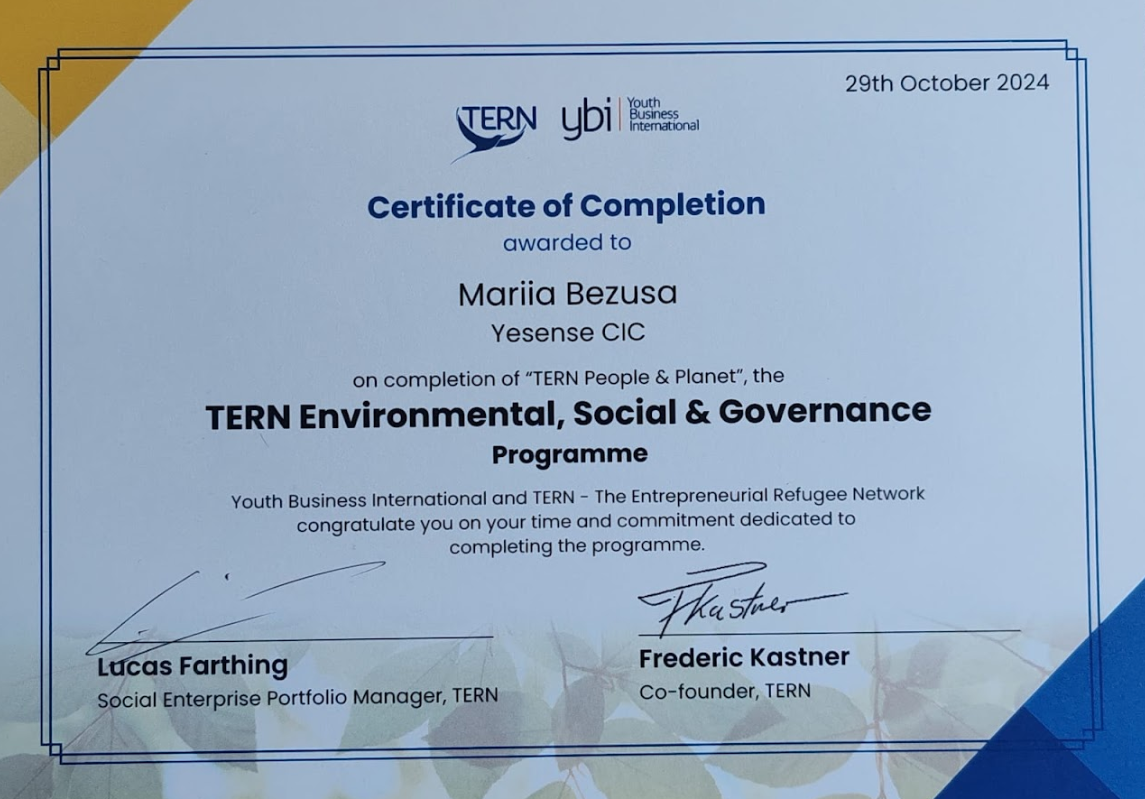
Yesense ESG Certification
This certification represents our commitment to sustainable, responsible, and inclusive practices in every aspect of our work. For us, it’s not just about providing art-healing sessions—it’s about making a difference for those who need it most.
At Yesense, we believe in the healing power of art to help people reconnect with themselves and the world around them, teach them to find harmony and respect with nature, recognizing that they are an integral part of it. We promote mindful living, encouraging people to see themselves as stewards of the environment.
What this means to us:
More opportunities to bring art-healing to marginalized communities
A promise to always support equality, inclusion, and transparency in everything we do
Our journey is just beginning, and we are excited to continue growing with our community. Thank you for your support, and let’s keep making the world a more compassionate and resilient place—together!
Our commitment to ESG
We provide accessible art-healing sessions to support emotional well-being, focusing on those who are vulnerable and in need
We teach people to see themselves as a part of nature, using natural materials and encouraging sustainable, mindful living.
We create a safe and inclusive environment, guided by values of trust, transparency, and respect for every individual’s unique story.
ESG is essential
because it goes beyond profit, focusing on the long-term health of our communities, planet, and businesses. By integrating ESG principles, organizations like Yesense commit to sustainable practices that protect the environment, promote social equality, and ensure ethical governance. This not only enhances trust and transparency but also empowers marginalized communities, fosters resilience, and contributes to a healthier, more equitable world. Embracing ESG is about creating a positive legacy—where business success aligns with the well-being of people and the planet.
Social Responsibility — Less Obvious Tips for Everyday Sustainability
Supporting Local Producers: Shop Smart Without Overspending
Instead of a regular trip to the supermarket, visit a local farmers’ market at the end of the day. Farmers are often willing to reduce prices on fresh products that didn’t sell throughout the day. This way, you not only save money but also support local businesses and reduce your carbon footprint.
Volunteering: Use Your Skills Unconventionally
If you have professional skills (design, translation, programming), offer them to local charities. This helps the community while saving time and resources that the organisation might spend on commercial services. For example, creating a website for a local initiative can help them attract more support.
Building Inclusivity: Giving a New Life to Used Items
Organise a “swap fair” in your neighbourhood or workplace. This event allows everyone to bring items they no longer need that could be useful to others. It’s a way to support an inclusive society where objects are given a second life, and people can find what they need without extra expenses.
Responsible Shopping: Choose ‘Zero-Waste’ Products
Look for “zero-waste” shops where you can buy products without packaging. They often offer goods in glass jars or by weight, significantly reducing plastic use. Additionally, check for apps that show the nearest eco-friendly shops.
Eco-Friendly Gifts: Swap Traditional Items for Greener Alternatives
Gift “living” items like small indoor plants, herb-growing kits, or handmade natural cosmetics. These are not only practical gifts but also promote sustainability and reduce waste.
Ethical Governance — Simple Yet Unobvious Solutions
Reducing Your Carbon Footprint: Kitchen Tricks for Saving Energy
Cook multiple dishes at once. Using the oven or slow cooker for several meals simultaneously saves energy. Frozen portions can be reheated quickly, reducing energy use even further.
Eco-Friendly Office Hacks: Organise Your Workspace
Adopt simple ways to save energy in the office, like moving your desk closer to a window for natural light or setting designated times when all devices are turned off. Plug timers into sockets to avoid unnecessary energy consumption outside working hours.
Checking Company Transparency: Use Online Tools
Take advantage of online resources that check companies for ethical standards. This will help you choose responsible suppliers and avoid those who do not comply with ESG principles.
Financial Investments: Unconventional Directions
Diversify your investments in microfinance projects or renewable energy initiatives. This not only provides a stable income but also supports sustainable development and environmentally friendly projects.
Inspiring Stories and Examples — How Others’ Successes Can Be Yours
People Who Change the World: From Local Initiatives to Global Changes
People Who Change the World: From Local Initiatives to Global Changes
Turning a Neglected Space into a Green Haven
In East London, a small group of neighbours decided to transform an abandoned lot that had become a hotspot for litter and antisocial behaviour. Armed with gardening tools and plenty of enthusiasm, they organised a weekend clean-up event, inviting families, children, and local businesses to participate.
Over time, the empty space was turned into a beautiful community garden, full of flowers, herbs, and vegetable plots. The initiative didn’t just clean up a neglected area; it brought people together, created a safe and green space for relaxation, and encouraged others to start similar projects in their neighbourhoods. This story shows that local action can have a significant impact, improving both the environment and community spirit.
A Family Farm Goes Organic and Inspires Change
A family-owned farm in the outskirts of London made a bold decision to completely transition to organic farming. Initially, it was a challenge, with financial risks and learning curves. But over the years, the farm thrived, adopting sustainable practices like crop rotation, organic fertilisers, and natural pest control.
Now, the farm not only sells organic produce locally but also educates other farmers on making the shift to sustainable agriculture. Their farm has become a hub for workshops, where people come to learn about organic practices, composting, and soil health. This inspiring story shows how individual commitment can grow into a wider movement, influencing others and promoting healthier food systems.
Innovative Solutions: Technologies That Save the Planet
“Green Concrete” that Absorbs Carbon Dioxide
One groundbreaking technology changing the construction industry is “green concrete.” Unlike traditional concrete, which contributes significantly to carbon emissions, this innovative material absorbs CO2 from the atmosphere. This is possible due to a unique chemical reaction that happens as the concrete cures, trapping carbon within its structure.
Not only is this material sustainable, but it also offers the same durability as conventional concrete. It’s now being used in projects worldwide, making cities greener and more sustainable. This technology highlights how even traditionally harmful industries can adapt and change for the better.
Home Devices that Turn Waste into Fertiliser
New, compact kitchen devices can now transform food scraps into fertiliser within hours. Using a combination of heat, airflow, and natural enzymes, these devices create nutrient-rich compost that can be used for gardens or indoor plants. They are designed for small spaces and make it easier than ever for people to compost at home, reducing food waste and enriching soil health.
This technology is perfect for urban dwellers who may not have access to a traditional compost pile, allowing them to play a part in the circular economy effortlessly.
Rainwater Harvesting Systems for Urban Gardens
With water scarcity becoming a growing issue, many urban gardeners are turning to rainwater harvesting systems. These systems capture and store rainwater from rooftops, which can then be used to water plants, wash tools, or even flush toilets. This reduces the strain on local water supplies and provides a reliable source of hydration for gardens.
Collaboration Ideas: How to Achieve More Together
Organise a Neighbourhood Flash Mob for Recycling
Want to make recycling fun and engaging? Organise a neighbourhood flash mob focused on collecting recyclables. Set a specific day, spread the word, and encourage everyone to join in. Provide some music, snacks, and a sense of celebration to transform a regular clean-up into a community event.
Not only does this boost recycling rates, but it also strengthens community bonds. You might even turn it into a monthly tradition, encouraging neighbours to keep the area clean together.
Host Joint Clean-Up Events in Local Parks
If there’s a park or natural space in your area that needs some TLC, gather a group of like-minded individuals and plan a clean-up. Make it a fun event by inviting local businesses to sponsor refreshments or prizes for those who collect the most litter.
Include educational activities like talks on local biodiversity or waste reduction tips to inspire participants. These events can foster pride in local green spaces, motivating the community to maintain them long after the event.
Run Educational Workshops on Eco-Friendly Living
Knowledge is power, and one of the best ways to encourage eco-friendly living is through education. Organise workshops in community centres, local cafes, or even online, focusing on topics like zero-waste living, urban gardening, or upcycling.
Invite experts to share their knowledge or run practical sessions where participants can make their own eco-friendly products, such as beeswax wraps or compost bins. These workshops can be great for connecting with like-minded people and building a community dedicated to sustainability.
Start a Community Garden or Allotment Project
If you have a vacant lot in your area or an underused green space, consider starting a community garden or allotment. Bring together neighbours, local businesses, and schools to contribute time, resources, and skills. Community gardens not only provide fresh produce but also become a space for social interaction, education, and relaxation.
Tools and Additional Resources — How to Make ESG Part of Your Everyday Life
Useful Apps for Eco-Conscious Living
Ecosia — a search engine that plants trees for every search you make.
Too Good To Go — a platform for reducing food waste, allowing you to buy surplus food from restaurants and shops at a discount.
Oroeco — an app that helps track your carbon footprint and provides tips on reducing CO2 emissions.
Good On You — check a brand’s ethical standards before purchasing, learn about their environmental impact and workers’ rights.
Refill App — find locations to refill your reusable water bottle and avoid single-use plastic.
Recommended Books and Websites for In-Depth Understanding of ESG
“Cradle to Cradle: Remaking the Way We Make Things” — a book about designing products with complete recyclability and zero waste in mind.
“The Upcycle: Beyond Sustainability” — another inspiring take on the future of design and manufacturing with a focus on ecology and social responsibility.
Website: Sustainable Brands — a platform for businesses featuring the latest trends in sustainable development.
Website: EcoWatch — a reliable source of environmental news, the latest research, and tips for eco-friendly living.
Contact Information for Volunteering and Eco-Initiatives in London
1. London Wildlife Trust
Focus: Conservation of London’s wildlife and habitats through hands-on volunteering, education, and nature restoration projects.
Website: www.wildlondon.org.uk
2. Thames21
Focus: Protecting and improving the rivers and waterways in London. Regular river clean-ups and educational programmes.
Website: www.thames21.org.uk
3. Sustainable Merton
Focus: Promoting sustainability in the London Borough of Merton with projects on waste reduction, air quality, and food sustainability.
Website: www.sustainablemerton.org
4. Friends of the Earth London
Focus: Environmental campaigning on climate change, air pollution, and sustainable food. Local events and volunteer opportunities.
Website: www.friendsoftheearth.uk
5. London National Park City
Focus: Making London greener, healthier, and wilder through community projects, outdoor activities, and urban greening.
Website: www.nationalparkcity.london
6. City Harvest London
Focus: Reducing food waste and tackling hunger by redistributing surplus food to charities across London.
Website: www.cityharvest.org.uk
7. Capital Growth
Focus: Supporting community food-growing projects, providing training and resources to start and maintain urban gardens.
Website: www.capitalgrowth.org
8. Groundwork London
Focus: Local environmental projects focusing on green spaces, energy efficiency, and youth empowerment.
Website: www.groundwork.org.uk/london
9. Trees for Cities
Focus: Urban tree planting projects to make cities greener and healthier, with opportunities for local volunteering.
Website: www.treesforcities.org
10. Hubbub
Focus: Creative environmental campaigns focusing on waste reduction, sustainable fashion, and urban greening. Volunteer events and activities throughout London.
Website: www.hubbub.org.uk
Why It’s Important to Act Today
The planet’s future depends on each of us, and even the smallest changes in daily life can have a significant impact. By choosing to support local producers, reduce waste, consume resources responsibly, and share knowledge with others, we contribute to a sustainable future. Each of us can be an agent of change, simply by adjusting habits and adopting eco-friendly solutions. Remember: small steps lead to big changes, and this journey starts with you.
> Visit ESG Form

Registration
Every journey starts with a first step — this is yours.
By registering your interest, you’re taking the first step toward creative healing, connection, and self-expression. Tell us a little about yourself and what you’re looking for, and we’ll guide you toward the right program or opportunity.